


The Daily Miracle
At Home Sleep Study: What You Should Know
Published
March 24, 2026
Author
Suze Dowling
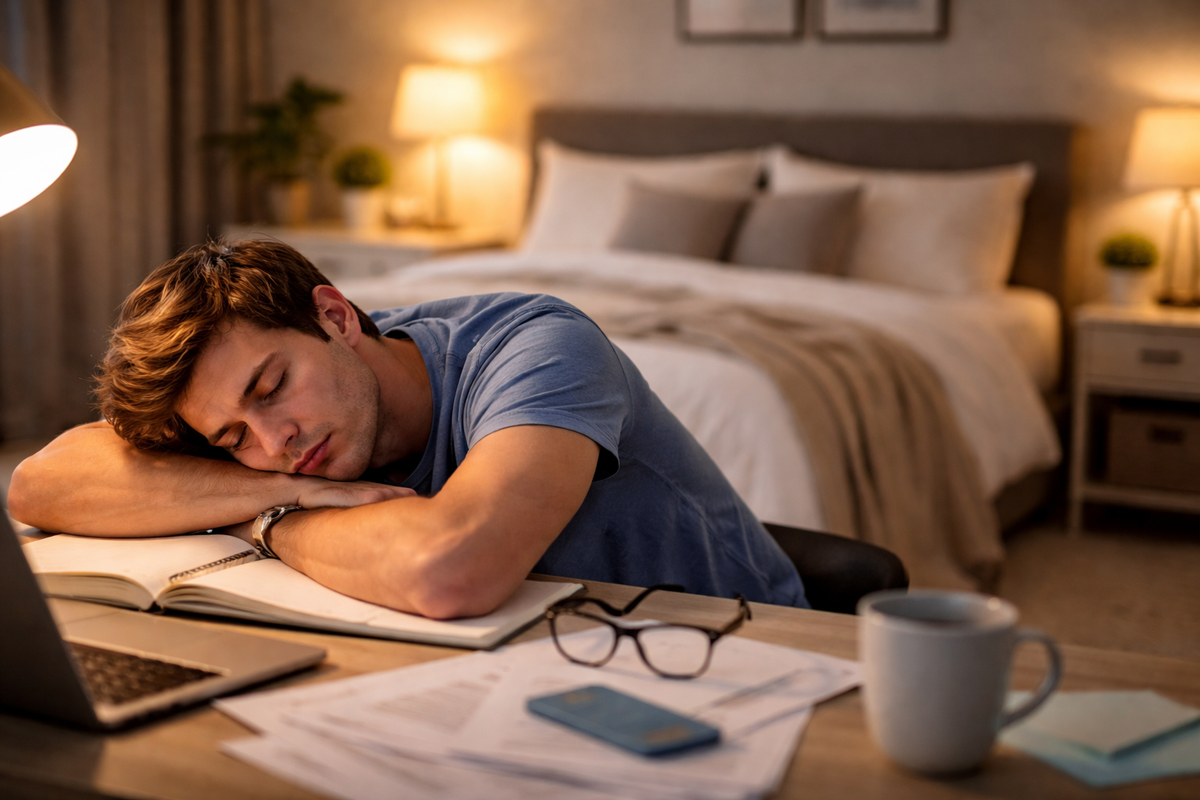
An at home sleep study offers a convenient way to diagnose sleep disorders without spending a night in a clinical sleep lab. These tests monitor your breathing, oxygen levels, and sleep patterns from the comfort of your own bedroom. Understanding what happens during an at-home sleep study helps you prepare for the process and interpret results effectively.
Sleep disorders affect millions of people and create cascading health problems when left undiagnosed. Poor sleep quality contributes to cardiovascular disease, diabetes, depression, and cognitive decline over time. Identifying and treating sleep issues transforms both physical health and mental wellbeing through consistent, restorative rest.
At-home sleep testing has become increasingly accessible and accurate in recent years. The right diagnosis leads to targeted treatments that dramatically improve sleep quality and overall health outcomes.
What Is An At-Home Sleep Study?
An at home sleep study, also called home sleep apnea testing, measures specific physiological markers while you sleep in your own bed. These tests focus primarily on diagnosing obstructive sleep apnea, the most common sleep-related breathing disorder.
The testing equipment is simpler than what clinical sleep labs use but still provides accurate diagnostic information. Most at-home devices monitor airflow through your nose and mouth, blood oxygen saturation, heart rate, and chest movement patterns. Some advanced models also track body position and snoring intensity.
According to the American Academy of Sleep Medicine, home sleep apnea tests are appropriate for many patients suspected of having moderate to severe obstructive sleep apnea. The tests work best when sleep apnea is the primary concern rather than other complex sleep disorders.
These studies typically run for one to three nights depending on your doctor's recommendations. Multiple nights of data provide more reliable results and account for night-to-night sleep variability.
How Does An At-Home Sleep Study Work?
The process of completing an at home sleep study follows a straightforward protocol from equipment pickup through result interpretation. Understanding each step helps ensure accurate data collection and useful diagnostic information.
Getting Your Equipment
Your doctor or sleep specialist prescribes the at home sleep study and coordinates equipment delivery. Most patients receive devices through durable medical equipment suppliers or directly from sleep testing companies. The equipment typically arrives via mail or requires pickup from a medical facility.
Setup instructions come with the device and usually include written guides plus video demonstrations. Most modern systems are designed for simple self-application without medical training required. Customer support lines remain available if you encounter setup difficulties.
Using The Device
On your testing night, you attach sensors according to the provided instructions before your normal bedtime. The typical setup process takes 5-10 minutes once you understand the steps.
Common sensor placements include:
-
Nasal cannula or airflow sensor positioned under your nose
-
Finger probe measuring blood oxygen levels
-
Chest belt or sensor tracking breathing effort and body position
-
Additional sensors for heart rate and movement patterns
You sleep through the night as normally as possible despite wearing the equipment. The devices automatically record data throughout your sleep period without requiring any interaction. Most systems turn on when sensors detect you've gone to bed.
In the morning, you remove all sensors and pack the equipment for return. Some systems upload data wirelessly while others require you to mail the device back for analysis.
Getting Your Results
Sleep specialists analyze your data and generate a comprehensive report within one to two weeks typically. The analysis identifies breathing disruptions, oxygen desaturation events, and sleep fragmentation patterns. Your doctor reviews results with you and discusses treatment options if sleep apnea or other issues are detected.
Quality bedding creates optimal conditions for accurate sleep study results by promoting natural sleep patterns during testing nights.
What Conditions Can An At Home Sleep Study Diagnose?
Home sleep studies excel at detecting obstructive sleep apnea but have limitations for other sleep disorders. Understanding what these tests can and cannot diagnose helps set appropriate expectations.
At-home sleep studies primarily identify obstructive sleep apnea through specific breathing pattern analysis. The test measures how often breathing stops or becomes shallow during sleep. Results classify sleep apnea severity as mild, moderate, or severe based on disruption frequency.
Research published by the National Heart, Lung, and Blood Institute confirms that home sleep apnea tests demonstrate high accuracy for diagnosing moderate to severe cases. The testing sensitivity approaches 80-90% for clinically significant sleep apnea when properly conducted.
Home studies also detect oxygen desaturation patterns that indicate breathing problems during sleep. Repeated drops in blood oxygen levels signal potential health risks requiring medical intervention.
However, at-home tests cannot diagnose many other sleep disorders effectively. Conditions like restless leg syndrome, narcolepsy, REM sleep behavior disorder, and periodic limb movement disorder require in-lab polysomnography. These disorders need brain wave monitoring and more comprehensive physiological tracking than home devices provide.
What Are The Benefits Of At-Home Sleep Studies?
At-home testing offers significant advantages over traditional sleep lab studies for appropriate candidates. These benefits make sleep disorder diagnosis more accessible and convenient for many patients.
Convenience and Comfort
Sleeping in your own bed with familiar surroundings produces more natural sleep patterns than clinical environments. Your regular sleep environment, including your own pillows and room temperature preferences, reduces testing anxiety. This comfort factor often leads to more representative data about your typical sleep quality.
You avoid travel to sleep centers and the scheduling constraints of limited lab availability. At-home testing fits easily into your normal routine without taking time off work or arranging childcare.
Cost Effectiveness
Home sleep studies typically cost 25-50% less than in-laboratory polysomnography studies. Insurance companies often prefer home testing when appropriate due to lower overall healthcare costs. The reduced expense makes diagnosis accessible to more patients who might otherwise delay testing.
Diagnostic Accuracy For Sleep Apnea
For patients with high pretest probability of obstructive sleep apnea, home studies provide diagnostic accuracy comparable to lab-based testing. The American Thoracic Society research confirms that properly conducted home sleep apnea tests yield reliable results for appropriate patient populations.
Multiple nights of home testing can actually provide more comprehensive data than single-night lab studies. Sleep patterns vary night to night, and multi-night home testing captures this natural variability.
What Should You Do Before Your At Home Sleep Study?
Proper preparation ensures accurate results and smooth testing experiences. Following these guidelines maximizes the diagnostic value of your home sleep study.
Preparation steps for optimal results:
-
Maintain your normal sleep schedule for several days before testing
-
Avoid alcohol for 24 hours before the study night
-
Skip sleeping medications unless your doctor specifically approves them
-
Keep your bedroom at a comfortable temperature
-
Charge any battery-powered equipment fully before use
-
Review all instructions thoroughly before your testing night
Inform your sleep specialist about all medications you currently take. Some substances affect sleep architecture and breathing patterns in ways that might influence test interpretation. Your doctor may recommend temporarily adjusting certain medications if medically appropriate.
Clean towels and fresh bedding create hygienic testing conditions that promote natural, comfortable sleep during your study nights.

How At Home Sleep Study Results Transform Your Health
Accurate sleep disorder diagnosis through at-home testing opens pathways to treatments that dramatically improve physical and mental wellbeing. Understanding the health transformation possible through proper diagnosis motivates patients to complete testing.
Treating diagnosed sleep apnea reduces cardiovascular disease risk significantly. Untreated sleep apnea increases heart attack and stroke risk by 2-3 times according to medical research. CPAP therapy or other treatments restore normal breathing and reduce these serious health threats.
Mental health improves substantially when sleep quality increases through proper treatment. Chronic sleep disruption contributes to anxiety, depression, and mood disorders that resolve partially or completely with effective therapy. Patients report better emotional regulation and improved quality of life.
Cognitive function and daytime alertness increase dramatically after sleep disorder treatment begins. Memory consolidation, decision-making ability, and reaction times all improve with restorative sleep. Workplace productivity and driving safety both benefit from enhanced daytime functioning.
Energy levels and physical stamina rise when breathing normalizes during sleep. Your body completes essential repair and restoration processes interrupted by untreated sleep disorders. Many patients describe feeling decades younger after beginning appropriate treatment.
Visit Miracle Made for bedding solutions that support healthy sleep habits alongside medical treatments for diagnosed sleep conditions.
Source:
American Academy of Sleep Medicine
Our Latest Posts


Featured Products

Luxe Cooling Sheet Set
Cool all night, clean 3x longer
 Lightweight, breathable 100% cotton
 Silver-treated for 3x less laundry
 Secure corners for a stay-put fit
$109

Extra Luxe Cooling Sheet Set
Our coolest sheets—for hot sleepers
 Added cooling treatment for all-night comfort
 Extra-refined sateen for a 5-star hotel feel
Silver-treated for 3x less laundry
Extra-refined sateen for a 5-star hotel feel
Silver-treated for 3x less laundry
$159

Luxe Cooling Pillowcases
Soft, clean, and gentle on your skin
Lightweight, breathable 100% cotton
Silver-treated to stay cleaner longer
Smooth sateen, soft against your skin
$39

3-Temperature-Zone Comforter®
Balanced warmth and breathability
 Zoned fill keeps your temperature just right
Silver-treated to stay cleaner longer
Zoned fill keeps your temperature just right
Silver-treated to stay cleaner longer