


The Daily Miracle
Best Cooling Sheets for Hot Sleepers: The Complete Buying Guide
Published
October 05, 2026
Author
Suze Dowling
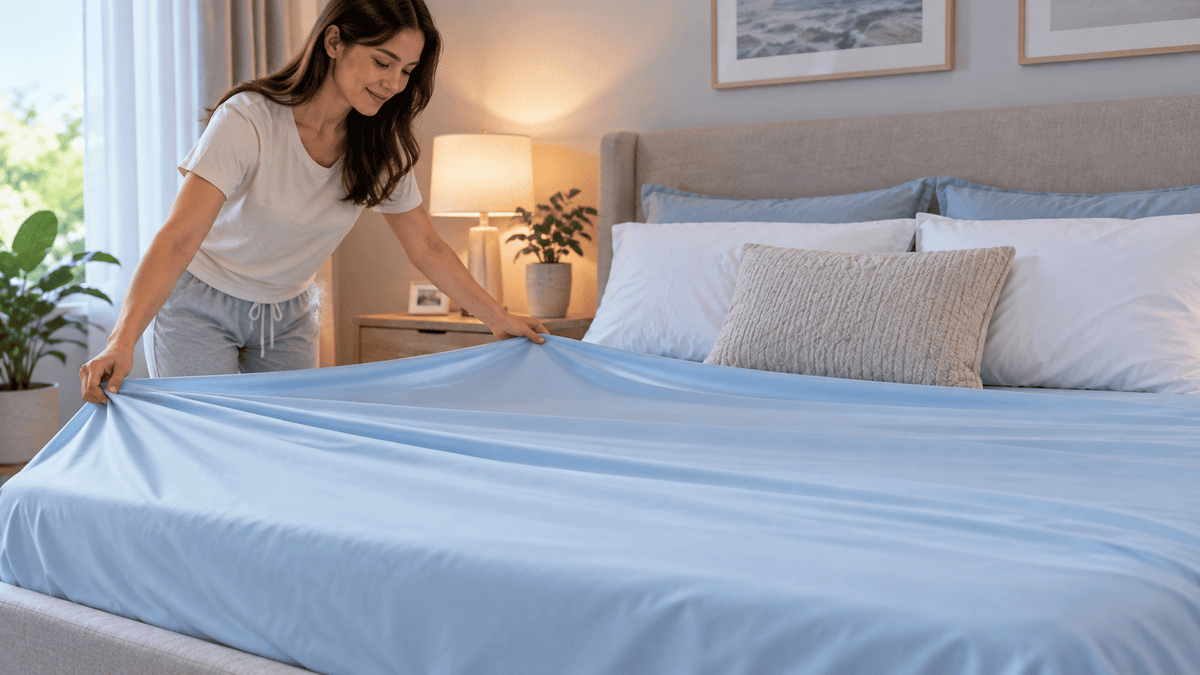
The best sheets for hot sleepers combine a breathable fiber like long-staple cotton, linen, or Tencel lyocell with an open weave like percale. Choose Tencel or viscose if you sweat heavily, linen if you run warm in dry heat, and cotton percale as the reliable all-rounder. Skip microfiber, flannel, and dense sateen if overheating is your main problem.
Finding the best sheets for hot sleepers comes down to understanding what actually causes night sweats in the first place. It's not just about the season or your blanket. Fabric choice, weave, and breathability all play a direct role in how your body regulates heat through the night.
This guide walks through everything that matters when shopping for cooling sheets, from the science behind nighttime temperature drops to the specific materials, technology, and price tiers worth knowing before you buy.
How Body Temperature Affects Sleep Quality
Your body doesn't maintain a steady temperature overnight. It naturally cools down as part of falling asleep, and that drop plays a direct role in how well you rest.
A peer-reviewed study on sleep and thermoregulation from the National Institutes of Health explains that circadian core body cooling coordinates closely with sleep onset. When heat-trapping bedding interferes with this natural drop, it disrupts the transitions between NREM and REM sleep stages.
The Microclimate Between You and Your Sheets
Research on bedroom thermal environments shows the space between your body and your covers typically settles around 90 to 93 degrees Fahrenheit, with humidity sitting between 40 and 60 percent during normal sleep. Your sheet's job is managing that humidity, not just the temperature. A fabric that traps moisture keeps that microclimate too damp even if the room itself is cool.
That disruption shows up the next morning as grogginess, restlessness, or waking up multiple times overnight. For hot sleepers, the problem compounds, since excess body heat on top of heat-trapping sheets creates a sleep environment working against the body's natural rhythm.
Here's what tends to happen when a sleep surface traps too much heat:
-
Delayed sleep onset as the body struggles to cool down
-
More frequent waking throughout the night
-
Reduced time spent in deep, restorative sleep stages
-
Morning fatigue even after a full night in bed
Who Counts as a Hot Sleeper
"Hot sleeper" covers more ground than people often realize. A few common patterns show up again and again, and knowing which one fits you helps narrow down what to look for in a sheet.
People who naturally run warm tend to have a higher baseline body temperature or a faster metabolism, both of which generate more heat overnight regardless of season.
People experiencing hormonal night sweats, often tied to pregnancy or menopause, deal with sudden temperature spikes that regular sheets struggle to handle.
People sharing a bed often deal with combined body heat from two people, which raises the surface temperature of the mattress and bedding well above what either person generates alone.
People in humid climates face an added challenge, since high humidity slows down sweat evaporation, trapping heat and moisture against the skin even with breathable fabric.
Hot Sleeping Versus Night Sweats
These two problems call for slightly different solutions, even though they feel similar in the moment. General warmth responds well to breathability alone. Sudden sweat surges need fast moisture release on top of breathability, since the fabric has to handle a burst of liquid rather than just steady airflow.
What Makes Cooling Sheets Cool
Not every sheet marketed as cooling delivers the same results. A few specific factors determine whether a sheet pulls heat away from your body or traps it against your skin.
Fabric Type
Natural fibers like cotton and linen allow more airflow than synthetic blends. Cotton in particular absorbs moisture and releases it quickly, which helps regulate temperature throughout the night. Supima cotton, a longer-staple variety, tends to feel softer and more breathable than standard cotton blends.
Weave Structure
A looser, more open weave lets air pass through the fabric more easily than a tight, dense weave. Percale sheets, known for their crisp feel, typically breathe better than heavier sateen weaves, which trap more warmth against the skin.
Thread Count Isn't Everything
A higher thread count doesn't automatically mean a cooler sheet. Past a certain point, higher thread counts actually trap more heat by packing fibers more densely. Most hot sleepers do well with a range of roughly 200 to 400, though sources disagree on the exact number since fiber length and yarn quality matter more than the count itself.
Cooling Sheet Materials Compared
Choosing a fabric gets easier once you see how the main options stack up side by side. This table breaks down fiber types on the factors that actually matter for heat and moisture.
| Fiber | Breathability | Moisture Handling | Feel on Contact | Durability | Typical Price Tier |
|---|---|---|---|---|---|
| Long-staple cotton | High | Strong | Crisp, cool | High | Mid to premium |
| Linen | Very high | Strong | Textured, cool | Very high | Premium |
| Tencel lyocell | High | Very strong | Smooth, cool | Moderate to high | Mid |
| Bamboo-derived viscose | Moderate to high | Strong | Silky, cool | Moderate | Budget to mid |
| Polyester or microfiber blends | Low | Weak | Soft, warms quickly | High | Budget |
A quick look at weave matters just as much as fiber choice, since the two work together rather than separately.
-
Percale uses a simple, tight crisscross weave that stays light and breathable, making it the most reliable choice for hot sleepers.
-
Sateen uses a looser weave with more thread floats, which creates a silkier feel but traps more heat against the skin.
-
Linen plain weave naturally has small gaps between fibers, giving it the most airflow of any common weave.
What "Bamboo" on a Label Really Means
Most sheets marketed as bamboo are actually rayon or viscose made from bamboo pulp, not a woven bamboo fiber itself. The Federal Trade Commission has taken action against major retailers for mislabeling rayon textiles as bamboo without disclosing the processing involved. When shopping, look for labels that say "rayon from bamboo" or "viscose from bamboo" for an accurate picture of what you're buying.
Cooling Sheet Technology, Decoded
Cooling sheets have moved well past basic cotton in recent years. A few specific technologies now drive most performance claims, and knowing how each works helps you judge whether a sheet actually delivers.
Silver-Infused Fabric
Silver woven into fibers naturally resists bacterial growth, which cuts down on the odor-causing buildup that makes a sheet feel warmer and less fresh between washes. Silver's main job is freshness and odor control rather than active cooling, so it works best paired with a genuinely breathable fiber and weave underneath it.
Phase-Change Materials
These materials absorb excess body heat when your temperature rises, then slowly release that stored heat back once your body cools down. The effect tends to be most noticeable at the start of the night, helping you fall asleep cooler, rather than delivering cooling for eight straight hours.
Moisture-Wicking Fibers
Tencel and eucalyptus-derived fabrics pull sweat away from the skin and spread it across a wider surface area, which speeds up evaporation compared to a fiber that simply absorbs moisture and holds onto it. This category has some of the strongest, most consistent performance among cooling technologies.
How Bedroom Temperature Affects Your Sleep
Sheets are only one part of the equation. Room temperature plays a significant role too, and getting both right makes the biggest difference for hot sleepers.
Research from the Sleep Foundation on bedroom environment points to a cooler room as essential for supporting the body's natural nighttime temperature drop. Most sleep experts recommend keeping bedroom temperature between 60 and 67 degrees Fahrenheit for optimal rest.
How Your Comforter Affects Sleep Temperature
Your sheet is a small part of your total bedding insulation. Studies measuring bedding systems show that total insulation can range widely depending on how many layers you use and how much of your body stays covered. This means a breathable sheet paired with a heavy, heat-trapping comforter still leaves you overheated. Layering lighter pieces that you can kick off partway through the night often solves more of the problem than switching sheets alone.
Signs Your Current Sheets Are Working Against You
A few telltale signs point to sheets that trap heat rather than release it.
-
Waking up sweaty even in a cool room
-
Sheets that feel damp or clingy by morning
-
Needing to kick off blankets repeatedly throughout the night
-
A sheet set that feels warm to the touch right out of the dryer
What Science Says About Heat and Deep Sleep
The connection between temperature and sleep quality isn't just anecdotal. Clinical research backs up what hot sleepers already notice.
A breakdown from Cleveland Clinic Health Essentials on temperature and sleep identifies excess heat as a primary disruptor of slow-wave sleep, the deepest and most restorative sleep stage. Slow-wave sleep plays a major role in physical recovery and memory consolidation, so losing out on this stage night after night adds up to a real impact on daytime energy and focus.
Best Sheets for Specific Situations
A few common situations call for slightly different priorities than general heat management.
Menopause and Hot Flashes
Hot flashes and night sweats affect a large share of women during the menopause transition and often last for several years. Fast moisture-wicking fabric like Tencel or a tightly woven percale handles sudden sweat surges better than fabric built mainly for softness.
Humid Climates Versus Dry Heat
Humid climates benefit most from fabric that actively pulls moisture away from the skin, since the surrounding air already holds too much moisture to help with evaporation. Dry, hot climates allow a bit more flexibility, since linen's natural airflow does much of the work without needing added moisture-wicking treatment.
Couples With Different Temperature Preferences
When one partner runs warm and the other doesn't, a breathable percale sheet paired with individually adjustable blankets or a dual-zone comforter solves more of the conflict than chasing an extreme cooling sheet alone.
Addressing the Bacteria Problem Hot Sleepers Face
Sweating more means accumulating more organic matter in your sheets, which creates a separate issue from thermal comfort: bacterial buildup and odor.
Why This Requires a Different Solution
Breathable fiber and open weave manage heat and moisture, but neither one prevents bacteria from multiplying in fabric that absorbs more sweat than average. This is a hygiene issue, not a thermal one, and it requires antimicrobial treatment to solve rather than fiber choice alone.
Silver-treated cooling sheets reduce up to 99.7% of odor-causing bacteria at the fiber level, which keeps the sheet fresh even as it absorbs the additional sweat hot sleepers naturally produce. This works alongside breathable cotton rather than replacing it, giving you both temperature control and lasting freshness in the same product.
For sleepers who want an even more aggressive cooling sensation at the top layer, the Cooling Comforter uses a jersey-knit nylon and spandex shell engineered to feel up to 4°F cooler on contact, paired with the same silver treatment for hygiene. Combining breathable cotton sheets underneath with an engineered cooling shell on top addresses both ends of the temperature spectrum.
How to Choose the Right Cooling Sheets
Shopping for cooling sheets gets easier once you know which features matter most. A few key questions narrow down the options fast.
-
Identify whether your main issue is general warmth or sudden sweat surges
-
Choose a fiber suited to that issue, then check the weave matches it
-
Confirm the thread count sits in a reasonable range rather than chasing the highest number available
-
Check fit details like pocket depth so the sheet stays secure on your mattress
Price Tiers by Material
Budget-friendly options usually rely on polyester or microfiber blends, which keep costs low but sacrifice breathability. Mid-range sheets typically use cotton percale or Tencel, balancing performance with a reasonable price point. Premium options lean toward long-staple cotton percale or European linen, offering the best combination of durability and breathability over years of use.
Caring for Cooling Sheets to Keep Them Performing
Even the best cooling sheets lose effectiveness without proper care. Buildup from detergent residue, body oils, and sweat can clog fibers over time, reducing breathability.
-
Wash weekly in cold or warm water with a mild detergent
-
Skip fabric softener, which coats fibers and reduces breathability
-
Tumble dry on low heat or line dry to avoid fiber damage
-
Rotate between two sets to reduce wear on any single sheet set
A sheet that's lost its coolness over time usually hasn't changed physically. Softener buildup and high heat from repeated drying cycles are the most common culprits, and both are easy to fix going forward.
Matching Cooling Sheets to the Rest of Your Bedding
Sheets alone can't fully solve a heat problem if the rest of your sleep setup works against you. Pairing breathable cooling sheets with lighter, more breathable blankets and comforters gives your whole sleep setup a chance to regulate temperature properly. For hot sleepers who want an extra layer of comfort without sacrificing breathability, the Extra Luxe Sheet Set offers a heavier feel while still prioritizing airflow and moisture control.
A full set of well-chosen bedding works together as a system rather than individual pieces. Matching breathable sheets with equally breathable pillowcases and a lighter duvet insert rounds out a sleep setup built for warmer nights.
Fresh towels matter here too, especially for anyone who showers before bed. Quick-drying, bacteria-resistant fabric keeps the whole bedroom routine feeling clean and cool from start to finish.
Common Mistakes Hot Sleepers Make When Shopping for Sheets
A few recurring mistakes lead people toward sheets that look appealing but don't actually solve the heat problem.
Chasing the highest available thread count tops the list, since this often works against breathability rather than for it. Trusting bamboo labeling without checking whether it's processed as rayon is another common misstep that leads to disappointment when the sheet doesn't perform as expected.
Assuming a cool-to-the-touch feel means cool all night is a frequent error too. That initial cool sensation fades within minutes for most fabrics, so it tells you little about how the sheet performs over a full eight hours. Ignoring your comforter while obsessing over sheet choice is the last major mistake, since a heavy top layer can undo even the most breathable sheet underneath.
A Quick Checklist Before You Buy
Use this checklist to evaluate any sheet marketed as cooling:
-
Confirm the fiber is long-staple cotton rather than a shorter-staple blend
-
Choose an open weave like percale, or a lightweight sateen, over dense constructions
-
Stay in the 200 to 400 thread count range instead of assuming higher numbers perform better
-
Look for antimicrobial or silver treatment if you sweat heavily at night
-
Check for secure-fit features like deep pockets and elastic corners
-
Verify OEKO-TEX® certification to confirm the fabric wasn't treated with chemicals that reduce breathability
A sheet set that checks every item on this list is genuinely built for hot sleepers. Sheets marketed on a single feature, like softness or an ultra-high thread count, often miss the combination that actually delivers all-night comfort.

Frequently Asked Questions
What Sheets Are Best for Hot Sleepers?
Breathable natural fibers like long-staple cotton, linen, or Tencel lyocell in an open weave like percale perform best. These combinations allow airflow and release moisture quickly rather than trapping it against the skin.
Is Percale or Sateen Better for Hot Sleepers?
Percale generally performs better for hot sleepers, since its tighter, crisscross weave allows more airflow than sateen's looser, silkier weave.
Are Bamboo Sheets Cooler Than Cotton?
Bamboo-derived viscose often feels smooth and cool at first touch, but there's no strong evidence it runs meaningfully cooler than quality cotton overall. Both can perform well depending on the specific weave and processing.
Do Cooling Sheets Stop Working Over Time?
Cooling sheets can feel less effective after repeated washes with fabric softener or high heat drying, both of which coat or damage fibers. Switching to a gentler wash routine often restores much of the original breathability.
What Thread Count Is Best for Hot Sleepers?
A range of roughly 200 to 400 works well for most hot sleepers. Past that range, higher thread counts tend to trap more heat rather than improve comfort.
Bringing It All Together
Choosing the best sheets for hot sleepers means looking past marketing claims and focusing on fiber, weave, and care. Natural fibers, breathable weaves, and a consistent wash routine make the biggest difference in how well your sheets perform on a hot night.
Pairing the right sheets with a properly cooled bedroom and a lighter comforter gives your body the best possible environment for falling and staying asleep. For sheets engineered around cooling, moisture control, and antimicrobial protection, check out what Miracle Made has to offer.
Disclaimer: Antimicrobial finish helps protect the fabric from odor-causing bacteria. Does not protect users against bacteria or other disease organisms.
Sources:
Sleep and Thermoregulation Study — National Institutes of Health (PMC)
Best Temperature for Sleep — Sleep Foundation
What Is the Ideal Sleeping Temperature for My Bedroom? — Cleveland Clinic Health Essentials
Our Latest Posts


Featured Products

Luxe Cooling Sheet Set
Cool all night, clean 3x longer
 Lightweight, breathable 100% cotton
 Silver-treated for 3x less laundry
 Secure corners for a stay-put fit
$109

Extra Luxe Cooling Sheet Set
Our coolest sheets—for hot sleepers
 Added cooling treatment for all-night comfort
 Extra-refined sateen for a 5-star hotel feel
Silver-treated for 3x less laundry
Extra-refined sateen for a 5-star hotel feel
Silver-treated for 3x less laundry
$159

Luxe Cooling Pillowcases
Soft, clean, and gentle on your skin
Lightweight, breathable 100% cotton
Silver-treated to stay cleaner longer
Smooth sateen, soft against your skin
$39

3-Temperature-Zone Comforter®
Balanced warmth and breathability
 Zoned fill keeps your temperature just right
Silver-treated to stay cleaner longer
Zoned fill keeps your temperature just right
Silver-treated to stay cleaner longer