


The Daily Miracle
What Is a Good Thread Count for Sheets? (The Honest Answer)
Published
November 02, 2026
Author
Suze Dowling
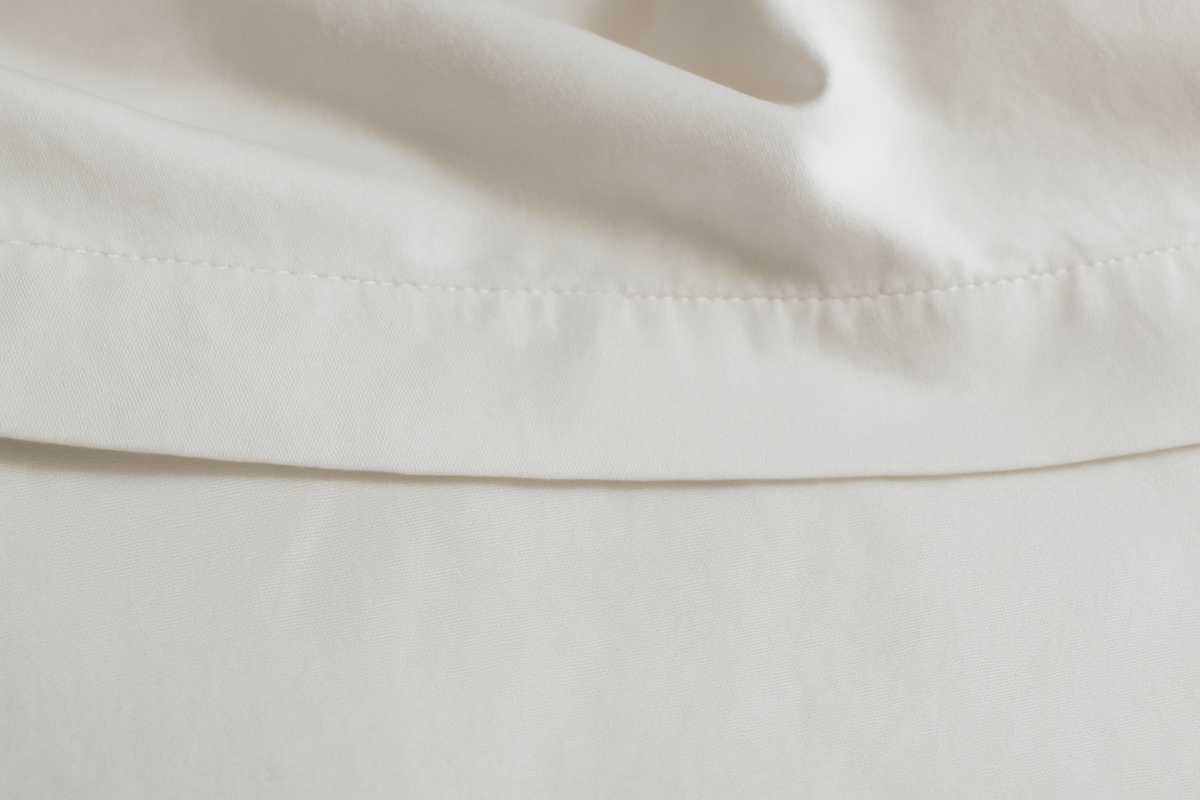
A good thread count for sheets sits between 200 and 600. The best number depends on the fabric. Cotton does well at 200 to 400. Sateen can go higher. Anything past 800 usually signals a marketing trick.
Thread count gets more credit than it deserves. This guide gives honest ranges by fabric and weave. You'll learn how inflated numbers work and what matters more than the count. A simple label checklist helps you shop with confidence.
What Thread Count Measures
Thread count is the number of threads woven into one square inch of fabric. Sleep Foundation says you add the lengthwise threads and the widthwise threads. A fabric with 100 of each has a count of 200.
The number describes density. It does not describe thread quality, fiber length, or how the fabric feels. Two sheets with the same count can feel very different. That is why the number alone can't tell you much.
Warp and Weft
Every woven fabric has two sets of threads. The warp threads run the length of the fabric. The weft threads cross them side to side. Thread count combines both. Fabric makers set these threads on a loom, and the loom pattern creates the weave.
Why Shoppers Rely on It
Thread count is easy to compare. A bigger number looks better on a shelf. Retailers know this, and they print the number in large type. A single number replaces a complex choice, so people trust it.
The Honest Range by Fabric
No single count suits every sheet. Fabric and weave change the target. This table uses Sleep Foundation's ranges:
Fabric or weave Good thread count range Cotton 200 to 400 Egyptian cotton 300 to 400 Percale weave 200 to 400 Sateen weave 300 to 600 Bamboo 300 to 500 Linen 80 to 140, rarely listed
Sleep Foundation sets 200 as the minimum advertised count. Average-quality percale can run 180 to 200, and average sateen is closer to 250 to 300. Linen counts are rarely listed and don't tell you much about quality.
Some fabrics skip thread count entirely. Silk uses momme, with 17 to 22 as the range Sleep Foundation lists. Microfiber uses grams per square meter, with 90 to 120 as a typical range. Flannel uses the same measure, and 170 or more points to durable sheets.
How Brands Inflate Thread Count
Most people stop reading after they see a big number. Some brands count the same fabric in a way that raises the figure. Knowing the tricks helps you avoid overpaying.
The Multi-Ply Trick
Yarn can be single-ply or multi-ply. Multi-ply yarn twists two or three thin strands together. Each strand holds fibers. Sleep Foundation explains that makers can count those fibers two or three times. A set labeled 900 may hold far fewer real threads.
The count rises, but the fabric does not improve. Multi-ply yarn can feel rougher and wear faster. Sleep Foundation warns that a 900-count set may be lower quality than a 300-count set. It also says counts of 900 or more often signal low quality.
Thin Threads and Tight Packing
A second trick uses very thin threads. Thin threads fit more tightly into a square inch. That raises the number, but the fabric can feel stiff or paper-like. Dense fabric also moves less air. That cuts breathability, which hurts hot sleepers most.
There is a physical limit, too. A square inch of fabric can only hold so many threads before it gets crowded. After that point, the fabric stops getting softer. It starts getting heavier and less flexible.
Single-Ply and Multi-Ply Compared
This table sums up the difference in plain terms. It reflects the general points Sleep Foundation makes:
|
Feature |
Single-ply yarn |
Multi-ply yarn |
|
How it is counted |
Each thread once |
Fibers can be counted two or three times |
|
Label risk |
Lower |
Higher |
|
Typical feel |
Smooth and even |
Can feel rougher |
|
What to check |
The weave and fiber |
The ply and the real count |
Ask the seller for the ply when the label does not say. A clear answer is a good sign. A vague answer suggests the number may not be honest.
Why Yarn Quality Beats the Number
Sleep Foundation states that yarn quality often matters more than thread count. Good yarn at a modest count can feel better than weak yarn at a high count. This is the part of sheet shopping that gets lost in marketing.
Yarn quality comes from the fiber and how it is spun. Longer cotton fibers make a smoother, stronger yarn. Short fibers leave more loose ends, which feel rough and pill sooner. Cotton labels like Egyptian point to longer fibers. The label alone is not a guarantee.
A study on cotton weaves covers yarn count, strength, and fabric density. It compares single-ply and multi-ply cotton. Its main message fits the rest of this guide. Fabric structure shapes how sheets feel and wear, not the label number.
How Weave Changes the Feel
Weave is how the threads cross each other. It changes texture, weight, and heat. Two sheets with a 400 count can feel different because of the weave. The three common weaves are below:
-
Percale: A simple one-over, one-under pattern. It feels crisp and light.
-
Sateen: Several threads float over one. It feels smooth and silky.
-
Twill: A diagonal pattern. It feels soft and drapes well.
Percale suits people who want a crisp, cool feel. Sateen suits people who want a smooth, soft feel. Percale usually sits at a lower count than sateen, which is why the ranges above differ. Comparing a percale count to a sateen count is like comparing two different units.
Our post on cotton sheets for hot sleepers goes deeper on how cotton handles heat.
Reading Thread Count in Real Examples
Numbers make more sense with examples. These three sample labels show how to judge a claim. The sets are made up, but the logic is real.
-
Set A: 300 thread count, 100% single-ply cotton, sateen weave. This sits inside the sateen range. The fiber is clear, and the count is modest. It is a sound choice.
-
Set B: 1,000 thread count, polyester blend. The count is far above the usual range. The blend may trap heat. Treat the number with doubt.
-
Set C: 400 thread count, cotton percale. This sits at the top of the percale range. It should feel crisp and breathe well.
Set A and Set C look alike on paper, but they feel different. One is silky, and the other is crisp. Set B looks best on the shelf and likely performs worst. The lesson is to read the fiber and weave first, then the count.
Thread Count and Heat
Heat is where thread count shows up most for hot sleepers. A dense fabric leaves less room for air. Air and moisture need paths to move through the sheet. A study on woven fabrics looks at thread density and yarn structure. It links both to air flow and water vapor movement.
The point is simple. Very tight weaves can block air. That is one more reason to skip extreme counts. Hot sleepers do better with a breathable weave and a count in the middle of the range.
Fiber matters here too. Cotton breathes well. Some synthetics trap heat. A cotton sheet at a modest count often feels cooler than a dense synthetic one. Our guide on cooling sheets vs bamboo sheets compares two popular options.
Best Thread Count by Sleeper Type
Your sleep habits and climate narrow the choice. This table gives a starting point, based on the ranges above:
|
If you want |
Look for |
Count to aim for |
|
A crisp, cool feel |
Cotton percale |
200 to 400 |
|
A smooth, silky feel |
Cotton sateen |
300 to 600 |
|
Breathability on warm nights |
Cotton or bamboo, light weave |
300 to 400 |
|
Value for money |
Single-ply cotton |
200 to 400 |
|
Relaxed, textured bedding |
Linen |
Ignore the count |
These are guides, not rules. Sleep Foundation also notes that weave changes the ideal count for each fabric. Try a set during a trial period if you can.
Materials Without a Thread Count
Not every sheet uses thread count. Some materials follow other measures. Knowing which one to read saves you from guessing.
Use this list as a quick guide:
-
Linen: Rarely lists a count. Look at the fiber and the weight.
-
Silk: Check the momme. The range Sleep Foundation lists is 17 to 22.
-
Microfiber: Check the weight in GSM. A typical range is 90 to 120.
-
Flannel: Check the GSM. A figure of 170 or more points to durable sheets.
-
Jersey: Check the weight. Around 150 GSM is common for cotton versions.
Weight tells you how heavy the fabric is. Heavier fabric feels warmer. Lighter fabric feels cooler. For summer, pick lighter options.
How to Read a Sheet Label
A label gives you clues if you know where to look. Follow these steps in the store or online:
-
Find the fiber. Look for 100% cotton, linen, or the material you want.
-
Check the weave. Percale, sateen, or twill tells you the feel.
-
Compare the count to the range for that fabric.
-
Be wary of counts above 600 on cotton. Counts of 900 or more are a red flag.
-
Look for the word "single-ply" or the ply count.
-
Check the certifications, such as OEKO-TEX, which tests for harmful substances.
-
Read the care label and the return policy.
A short checklist like this beats chasing the biggest number. Pay attention to price, too. A very low price with a very high count suggests inflation.
How to Test Sheets at Home
Labels only tell part of the story. A few quick tests tell you more once the sheets arrive. Try these checks within the return window:
-
Run your hand across the fabric. It should feel even, with no rough patches.
-
Hold the fabric up to a window. Very sheer spots point to thin or uneven weaving.
-
Wash the sheets once and check for shrinking or color bleeding.
-
Sleep on them for a week. Note if you wake up hot or sweaty.
-
Check the surface after a few washes for fuzz or pilling.
A trial period makes this easier. Miracle Made lists a 100-night trial with free returns on U.S. orders for its sheets. Whatever brand you pick, choose a return policy that lets you test sheets in your own bed.
Thread Count and Price
Price and thread count often rise together, but they do not track quality. A higher number can raise a price even when the fabric stays the same. A fair price follows the fiber, the weave, and the finish.
Use these points to judge value:
-
Compare per fabric. Compare percale to percale and sateen to sateen.
-
Watch for big jumps. A huge count at a low price suggests inflation.
-
Weigh the care. Fabrics that need dry cleaning cost more over time.
-
Count the lifespan. Sheets that last for years can cost less than cheap sets.
Spend where it counts. Fiber and construction deliver more value than a bigger number.
When to Replace Your Sheets
Even good sheets wear out. Thin spots, pilling, and a rough feel signal that the fabric has reached its limit. Fading and loose seams are other clues. Corners that no longer stay on the mattress also point to worn elastic.
Washing habits affect how long sheets last. Sleep habits and body heat matter too. Rotate two sets, and wash on a gentle cycle. When a set starts to feel scratchy, a new one will improve your sleep.
Common Thread Count Myths
A few ideas keep coming up in the aisle. These are the ones to drop:
-
Higher is always better. Past a point, extra threads add stiffness and cost.
-
Egyptian cotton means luxury. The name points to long fibers, but quality still varies.
-
Low counts are always rough. Good percale can feel crisp and soft at 200 to 400.
-
Thread count tells you durability. Yarn and fiber matter more.
-
All fabrics use the same scale. Linen, silk, and microfiber use other measures.
Replacing these myths with facts makes shopping faster and cheaper.
Caring for Sheets So They Stay Soft
Good sheets still need good care. Wash new sheets before first use. Use warm water and a mild detergent. Skip fabric softener, which can coat fibers and reduce breathability. Avoid washing with items that have zippers or hooks, since those can snag fabric. Soft towels are a better wash mate.
Dry sheets on low heat and remove them promptly. High heat wears fibers and can shrink cotton. A warm iron helps if you like a smooth finish. Rotate between two sets so each set lasts longer. Pair your sheets with the rest of your bedding for a matched, comfortable bed.
Where Miracle Made Sheets Fit
The Miracle Made cooling sheets are 100% cotton sateen at 300 thread count. That sits inside the sateen range Sleep Foundation lists. They use a double pick insertion weave that the brand says promotes airflow. The fitted sheet fits mattresses up to 17 inches deep.
The sheets carry a silver treatment. The brand reports that it reduces up to 99.7% of odor-causing bacteria. The brand also says the sheets stay fresher between washes, so you wash them less. Our guide on silver fabric explains the treatment in more detail.
Disclaimer: Antimicrobial finish helps protect the fabric from odor-causing bacteria. Does not protect users against bacteria or other disease organisms.
This is the point of the whole guide. A mid-range count, a breathable weave, and good cotton do more for comfort than a big number.
Thread Count FAQs
What Is the Best Thread Count for Sheets?
It depends on the fabric. Cotton does well at 200 to 400, and sateen can go up to 600.
Is 1,000 Thread Count Good?
Usually not. Sleep Foundation says counts of 900 or more often signal low quality.
Is 300 Thread Count Good?
Yes. It fits the cotton range and works well for sateen. Yarn quality still matters.
Does Thread Count Affect How Hot Sheets Sleep?
It can. Very dense fabric leaves less room for air. Hot sleepers do better with a mid-range count and a breathable weave.
What Matters More Than Thread Count?
Yarn quality, fiber, and weave. Sleep Foundation says yarn quality often matters more than the count.
Do Linen Sheets Have a Thread Count?
They can, but it is rarely listed. Sleep Foundation says the number is not a useful indicator for linen.

Choose Quality Over Big Numbers
A good count is a middle number paired with good fiber and the right weave. Read the label for fiber, weave, and ply. Treat very high counts with caution.
Miracle Made makes sheets built on this idea. Choose breathable cotton at a sensible count, and you'll get softer sleep without paying for a number.
Sources:
Best Thread Count for Sheets | Sleep Foundation
Water Vapor Permeability and Thermal Mechanics of Woven Fabrics | NIH PMC
Physical Properties and Durability of Cotton Weaves | NIH PMC
Our Latest Posts


Featured Products

Luxe Cooling Sheet Set
Cool all night, clean 3x longer
 Lightweight, breathable 100% cotton
 Silver-treated for 3x less laundry
 Secure corners for a stay-put fit
$109

Extra Luxe Cooling Sheet Set
Our coolest sheets—for hot sleepers
 Added cooling treatment for all-night comfort
 Extra-refined sateen for a 5-star hotel feel
Silver-treated for 3x less laundry
$159

Luxe Cooling Pillowcases
Soft, clean, and gentle on your skin
Lightweight, breathable 100% cotton
Silver-treated to stay cleaner longer
Smooth sateen, soft against your skin
$39

3-Temperature-Zone Comforter®
Balanced warmth and breathability
 Zoned fill keeps your temperature just right
Silver-treated to stay cleaner longer