


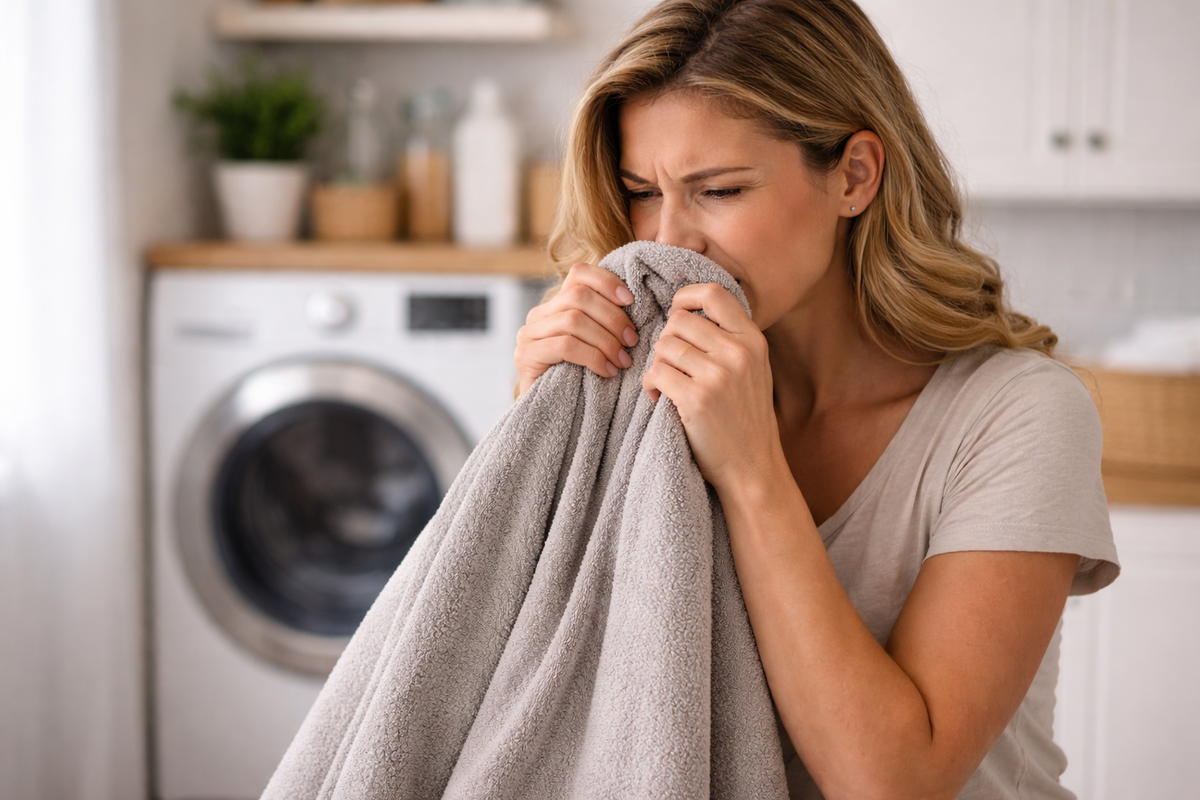
Why does my towel smell bad even after washing? This is one of the most common laundry complaints among households. You pull a freshly laundered towel from the closet and it smells musty or sour within minutes of use. The problem feels frustrating because the towel looks perfectly clean.
The answer lies in bacteria, moisture, and laundry habits working against you. Bad towel odor isn't a sign of poor hygiene. It's a sign that specific conditions are allowing microbial growth to thrive on your fabric. Once you understand the root causes, fixing the problem becomes straightforward.
What Actually Causes Bad Towel Odor?
Towel odor comes from bacterial activity, not dirt alone. Understanding what feeds that bacterial growth helps you address the problem at its source rather than masking it with fragrance.
Bacteria and Biofilm Buildup
Every time you dry off, your towel picks up dead skin cells, body oils, and moisture. These create an ideal feeding environment for bacteria. A 2023 study published in Scientific Reports found that towels used daily develop biofilm, a layer of microbial communities embedded in fabric fibers. This biofilm is the primary driver of persistent towel odor.
Specific bacteria produce volatile organic compounds as they break down organic matter on fabric. These compounds are responsible for the sour, musty, or "wet cloth" smell that many people recognize. Research published in Applied and Environmental Microbiology identified Moraxella osloensis as a key odor-producing bacterium commonly found in laundered towels dried indoors.
Moisture Trapped in Fibers
Towels hold more moisture than most other textiles due to their thick pile structure. When they don't dry completely between uses, that trapped moisture accelerates bacterial multiplication. Bacteria thrive in warm, damp environments, and a bathroom provides both conditions consistently.
Hanging towels in poor airflow areas makes the drying problem worse. Folded or bunched towels dry even more slowly, giving bacteria additional time to colonize fabric before the next use.
Detergent and Fabric Softener Residue
Using too much detergent or fabric softener coats towel fibers with residue over time. This buildup traps bacteria and moisture inside the fabric rather than releasing them during washing. Fabric softener, in particular, leaves a waxy coating that reduces towel absorbency while locking in odor-causing particles.
Ironically, the towels that smell bad after washing often have too much detergent in them. The residue creates a breeding ground that regular wash cycles can't fully penetrate.
Why Do Towels Smell Worse After Getting Wet Again?
Many people notice their towel smells fine when dry but releases a strong odor the moment it gets damp. This happens because moisture reactivates dormant bacteria and their byproducts in the fabric.
Bacterial metabolic activity slows down when the fabric dries out. The odor-producing compounds become temporarily suppressed. When moisture returns, bacterial activity resumes and volatile compounds are released again. This explains why the smell seems to appear from nowhere after use.
A comprehensive review in NCBI on laundry hygiene confirmed that storage of fabrics in even slightly humid environments allows odor-producing bacteria to persist and multiply between wash cycles.
How Often Should You Wash Your Towels?
Towel washing frequency directly affects odor development. Most people wash towels far less often than hygiene experts recommend.
General washing frequency guidelines:
-
Bath towels: Every 3 uses maximum
-
Hand towels: Every 1-2 days due to more frequent contact
-
Gym or workout towels: After every single use
-
Kitchen towels: Every 1-2 days or immediately after heavy use
-
Guest towels: Before and after each guest visit
Waiting longer between washes allows biofilm to establish more deeply in fibers. Once biofilm forms, standard washing alone may not fully remove the bacterial colonies driving odor.
How To Get Rid Of Bad Towel Smell
Identifying the cause helps you choose the right fix. Most smelly towels respond well to a combination of deep cleaning and adjusted laundry habits.
Strip Your Towels First
Towel stripping removes accumulated detergent, fabric softener, and mineral deposits from fibers. Fill a bathtub with hot water and add a mixture of washing soda, borax, and laundry detergent. Soak towels for 4-6 hours, stirring occasionally. You'll likely see the water turn murky brown as residue releases from fabric.
This process resets the towel's fiber structure, improving both absorbency and odor resistance. Many people only need to do this once to see a significant improvement.
Use White Vinegar and Baking Soda
White vinegar is one of the most effective natural treatments for smelly towels. It kills bacteria, breaks down residue, and neutralizes odors without harsh chemicals.
Wash smelly towels using these steps:
-
Run a hot water cycle with one cup of white vinegar and no detergent
-
Run a second hot water cycle with half a cup of baking soda and no detergent
-
Dry immediately and completely on the highest safe heat setting
-
Do not add fabric softener at any stage
This two-cycle method addresses both bacteria and residue buildup simultaneously. Most towels recover completely from persistent odor after this treatment.
Adjust Your Drying Habits
Drying habits matter as much as washing habits for towel freshness. Towels that don't dry fully between uses will develop odor regardless of washing frequency.
After each use, hang towels fully spread out in a well-ventilated area. Avoid folding damp towels or draping them over doors where airflow is limited. Outdoor drying in sunlight adds UV disinfection that significantly reduces bacterial load on fabric.
High-quality towels made with antimicrobial technology resist odor-causing bacterial growth between washes more effectively than standard cotton options.
Does Towel Fabric Type Affect Odor?
Fabric type influences how quickly odor develops and how easy it is to remove. Not all towel materials behave the same way when exposed to moisture and bacteria.
Standard cotton holds moisture well but dries slowly, creating longer windows for bacterial growth. Thick cotton terry towels are comfortable but take the longest to dry fully after use.
Microfiber towels dry faster than cotton but trap bacteria more easily in their tight weave structure. They require thorough washing at higher temperatures to fully clear embedded bacteria.
Bamboo and silver-infused fabrics offer natural antimicrobial properties that slow bacterial colonization. These materials maintain freshness longer between washes compared to standard cotton.
Proper bedding and towel materials designed with hygiene in mind reduce the frequency of deep cleaning needed to maintain freshness.
Can Your Washing Machine Cause Towel Odor?
Yes, a dirty washing machine transfers bacteria directly to towels during the wash cycle. Front-loading machines are particularly prone to mold and mildew growth in door seals and detergent drawers.
Signs your washing machine may be contributing to towel odor:
-
Clean laundry smells musty immediately after washing
-
Visible black residue around door seals or detergent trays
-
Standing water remains in the drum after the cycles are complete
-
A general damp smell when opening the machine door
Run a monthly hot cycle with machine cleaning tablets or white vinegar to remove bacterial buildup. Leave the door open between uses to allow the drum to dry completely. Wipe door seals regularly with a damp cloth to prevent mold establishment.
For cooling sheets and towels that stay fresher longer, fabric technology plays a significant role in managing moisture and bacterial growth between washes.

Simple Habits That Prevent Bad Towel Odor
Prevention is easier than treatment once you establish the right routine. Small daily adjustments dramatically reduce the conditions that lead to smelly towels.
-
Wash towels every 3 uses and never exceed that interval
-
Hang towels fully open immediately after every use
-
Skip fabric softener entirely on towels to preserve fiber openness
-
Use the correct detergent amount to prevent residue buildup
-
Clean your washing machine monthly to prevent bacterial transfer
-
Dry towels completely on medium-high heat after every wash
These habits address every major cause of towel odor. Maintaining them consistently eliminates the problem without requiring special products or repeated deep cleaning cycles.
Visit Miracle Made for towels engineered with silver-based antimicrobial technology that actively reduces odor-causing bacteria between washes.
Sources:
https://pmc.ncbi.nlm.nih.gov/articles/PMC10172380/
Our Latest Posts


Featured Products

Luxe Cooling Sheet Set
Cool all night, clean 3x longer
 Lightweight, breathable 100% cotton
 Silver-treated for 3x less laundry
 Secure corners for a stay-put fit
$109

Extra Luxe Cooling Sheet Set
Our coolest sheets—for hot sleepers
 Added cooling treatment for all-night comfort
 Extra-refined sateen for a 5-star hotel feel
Silver-treated for 3x less laundry
Extra-refined sateen for a 5-star hotel feel
Silver-treated for 3x less laundry
$159

Luxe Cooling Pillowcases
Soft, clean, and gentle on your skin
Lightweight, breathable 100% cotton
Silver-treated to stay cleaner longer
Smooth sateen, soft against your skin
$39

3-Temperature-Zone Comforter®
Balanced warmth and breathability
 Zoned fill keeps your temperature just right
Silver-treated to stay cleaner longer
Zoned fill keeps your temperature just right
Silver-treated to stay cleaner longer