


The Daily Miracle
Cooling Blankets: How They Work and How to Choose One
Published
November 02, 2026
Author
Suze Dowling
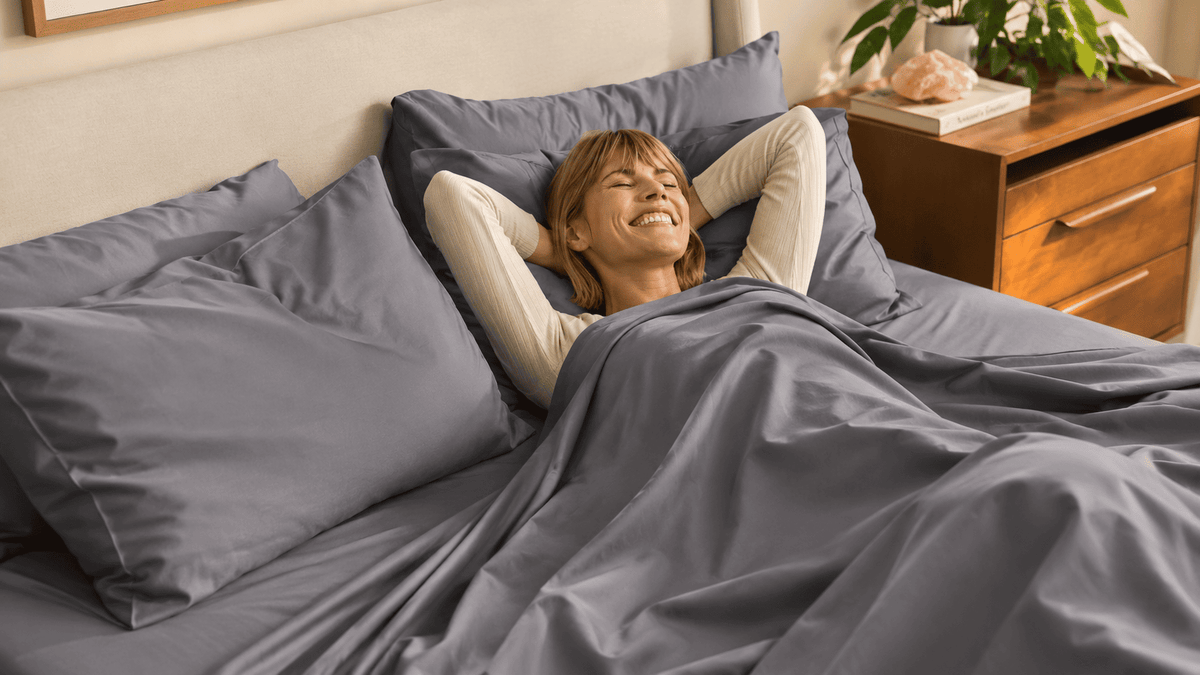
The best cooling blanket moves heat and sweat away from your body all night. Many blankets only feel cool for the first few minutes. Fabric, weave, and weight decide whether that cool feeling lasts.
This guide explains how cooling blankets work and how common materials compare. It also shows how to match a blanket to your sleep style. A short care section helps the fabric keep working for years.
How Cooling Blankets Work
A cooling blanket doesn't make cold. It helps your body shed heat faster than a standard blanket does. Three simple forces do most of the work, and one sleep study explains why they matter.
Heat Moves Away Through Touch, Moisture, and Air
Your skin warms the blanket the moment you get under it. The fabric then has three ways to pull that heat away. Here is how each one works in practice:
-
Contact: Smooth, dense yarns draw heat off your skin on first touch. This effect fades once the fabric warms up.
-
Moisture: Fibers like cotton, linen, and lyocell absorb sweat and release it fast. Drier skin feels cooler.
-
Airflow: Looser weaves and lighter weights let warm air escape instead of trapping it.
Why Humidity Affects Sleep More Than Temperature Alone
Sweat that stays on your skin does more than feel sticky. A review of how the thermal environment affects sleep describes the climate under your covers. It sits near 90 to 93°F with 40 to 60 percent humidity during normal sleep. The same review links hot, humid conditions to less deep sleep and less REM sleep.
That finding shifts the goal. A blanket that traps moisture can hurt your sleep even when the room feels fine. Moisture handling matters as much as a cool surface.
Cool to the Touch Versus Cool All Night
Your core body temperature drops as you fall asleep. Research on sleep and body temperature ties that drop to how quickly you drift off. A blanket that holds heat works against this natural process. A cool-to-touch fabric can help you settle in. Moisture handling and airflow keep you comfortable after that first hour.
Some blankets add phase-change coatings. These absorb heat for a short time, then stop once they warm up. Treat them as a small bonus, not the main reason to buy.
Cooling Blanket Materials Compared
Fiber and weave decide most of a blanket's performance. A textile study on weave and thermal comfort shows that yarn structure shapes airflow. Tighter weaves let less air through. Use this table to compare the common options:
|
Material |
Feel |
Moisture handling |
Airflow |
Best for |
|
Cotton percale or gauze |
Crisp, light |
Good |
High |
All-around summer use |
|
Linen |
Textured, relaxed |
Very good |
High |
Dry, hot climates |
|
Tencel lyocell |
Smooth, soft |
Very good |
Medium |
Night sweats |
|
Viscose from bamboo |
Silky, drapey |
Good |
Medium |
Cool-to-touch feel |
|
Nylon “cool-touch” blends |
Slick, cool at first |
Fair |
Medium |
Short-term cool feel |
|
Polyester microfiber |
Soft, plush |
Low |
Low |
Cooler sleepers |
Labels deserve a close look. Most "bamboo" and "eucalyptus" blankets are really viscose or lyocell. The process turns plant pulp into a new fiber. In the U.S., the Federal Trade Commission expects brands to label bamboo-based fabric as rayon. A clear fiber name tells you more than a marketing word.
Microfiber sits at the bottom of the table for a reason. Its tight, plush surface holds heat close to the body. Hot sleepers usually do better with natural fibers or lyocell.
Blanket Types and Who They Suit
Blanket type matters as much as fabric. Weight and thickness decide how much heat the blanket holds. Here are four common types and the sleepers who like them:
-
Lightweight throw or coverlet: One thin layer that holds very little heat. It suits summer and people who kick off covers.
-
Quilt: Stitched layers with light fill. It handles spring and fall well, especially with a cotton or linen cover.
-
Weighted blanket: It adds gentle pressure that many people find calming. It also adds insulation, so hot sleepers should pick a lower weight.
-
Comforter-weight blanket: A thicker, one-piece layer. It works for people who want one cover all year.
Seasons and Layering
Hot sleepers don't need a new blanket every season. Layers do the job. A light blanket carries you through summer. A quilt joins it in fall. You can remove one layer on warm nights without waking up.
A cooler room helps every blanket work better. A fan keeps air moving across the surface, which speeds up moisture release. The blanket and the room work as a team.
Three Buying Errors to Avoid
Shoppers often repeat the same mistakes. Watch for these three:
-
Trusting "instant cooling" claims. Cool-to-touch feel fades once the fabric warms up.
-
Ignoring weight. A heavy blanket can hold more heat than a light blanket made of a cooler fiber.
-
Skipping the fiber label. A vague name like "cooling fabric" hides what the blanket is made of.
How to Choose a Cooling Blanket
Match the blanket to how you run hot. Follow these five steps to narrow your options:
-
Name your heat problem. Sweating needs strong moisture handling. Steady warmth needs airflow.
-
Pick the fiber. Choose cotton, linen, or lyocell for sweat. Skip dense synthetics.
-
Check the weight. Lightweight, open weaves suit summer. Weighted blankets hold heat, so look for a breathable cover and a lower weight.
-
Choose the right size. Extra fabric tucked under you traps heat. Couples with different needs can use two blankets.
-
Read the care label. Easy care keeps the fabric performing. A fair return window lets you test the feel at home.
Match the Blanket to the Rest of Your Bed
A cooling blanket works best over breathable layers. Pairing it with cooling sheets keeps moisture moving through the whole bed. The rest of your bedding counts too. A thick mattress topper or a heavy duvet can undo the work of a light blanket.
Where a Cooling Comforter Fits
A blanket suits you when you want one thin layer. A comforter suits you when you want warmth control in a single piece. The Cooling Comforter feels up to 4°F cooler on contact. It replaces the blanket and duvet pair, which also means one less layer to manage at night.
Many hot sleepers use both. A light blanket carries them through summer. A comforter handles cooler months without adding extra heat.
How to Care for a Cooling Blanket
Care affects performance. Heat, softener, and lint can all dull a fabric's cooling ability. Keep these habits in mind:
-
Follow the care label first.
-
Wash on a gentle cycle in cool or warm water.
-
Skip fabric softener, which coats fibers and slows moisture release.
-
Wash it apart from fluffy towels, which shed lint onto smooth fabric.
-
Dry on low heat or hang it to dry.
Cooling Blanket FAQs
Do Cooling Blankets Really Work?
Yes, for most hot sleepers. The best ones move moisture and air. A fabric that only feels cool at first touch fades fast.
What Is the Best Material for Night Sweats?
Cotton, linen, and lyocell absorb sweat and dry quickly. These fibers keep skin drier than synthetics do.
Are Weighted Cooling Blankets Worth It?
They can help if you like deep pressure. Weight adds insulation, so choose a lower weight and a breathable cover.
Can You Use a Cooling Blanket in Winter?
Yes. A light, breathable blanket works as a layer under a warmer cover. You can add or remove layers as the night changes.
How Long Does a Cooling Blanket Last?
Care decides most of it. Natural fibers and lyocell often last for years with gentle washing. Coatings and cool-touch finishes wear off sooner, especially with hot dryers and fabric softener. Watch for pilling, thin spots, or a blanket that feels warmer than it used to.
Is a Cooling Blanket Good for Menopause Night Sweats?
It can help. Fabrics that absorb sweat and dry fast keep skin drier during a sudden flush. Light layers also let you adjust quickly. Speak with a doctor about symptoms that disrupt your sleep often.

Pick the Fabric First, Then the Features
Cooling comes from fabric that moves heat, sweat, and air. Start with the fiber and weave. Then match weight and size to your sleep style. Features like cool-touch finishes come last.
Miracle Made builds bedding around these same ideas for hot sleepers. Use the steps above to compare any blanket against your own needs.
Sources:
Effects of Thermal Environment on Sleep and Circadian Rhythm | Journal of Physiological Anthropology (NIH PMC)
Neurological and Physiological Mechanics of Sleep Cooling | NIH PMC
Fabric Weave, Thermal Conductance and Comfort Sensation | NIH PMC
Our Latest Posts

Featured Products

Luxe Cooling Sheet Set
Cool all night, clean 3x longer
 Lightweight, breathable 100% cotton
 Silver-treated for 3x less laundry
 Secure corners for a stay-put fit
$109

Extra Luxe Cooling Sheet Set
Our coolest sheets—for hot sleepers
 Added cooling treatment for all-night comfort
 Extra-refined sateen for a 5-star hotel feel
Silver-treated for 3x less laundry
$159

Luxe Cooling Pillowcases
Soft, clean, and gentle on your skin
Lightweight, breathable 100% cotton
Silver-treated to stay cleaner longer
Smooth sateen, soft against your skin
$39

3-Temperature-Zone Comforter®
Balanced warmth and breathability
 Zoned fill keeps your temperature just right
Silver-treated to stay cleaner longer